Close
Xpertcodes – Where Expertise Meets Innovation | Code | Consult | Expert
Your Google ranking can change without warning. One day, your page may appear near the top. A few days later, it may move lower. That can make SEO feel like a moving target.
Understanding your google keyword rank helps you see where your website stands. It also helps you make better SEO decisions. Instead of guessing, you can use real Google search results, Google Search Console, and reliable SEO data.
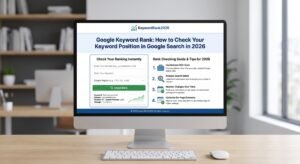
This guide explains how to check your Google keyword position, understand your keyword position in Google, and improve your visibility. You’ll also learn why rankings change and why Search Console’s average position is not always the exact position you see yourself.
| Topic | Read more |
|---|---|
| Google Keyword Ranking | Google Keyword Ranking: How to Check, Track and Improve Your Position in Google in 2026 |
| SEO Rank Tracking | SEO Rank Tracking: The Ultimate Guide to Track Google Keyword Rankings, Improve Search Visibility & Grow in 2026 |
| Google Keyword Ranking Checker | Google Keyword Ranking Checker: Powerful Guide to Check Your Keyword Position in Google in 2026 |
| Google Keyword Rankings | How to Check Your Google Keyword Rankings: Complete SEO Guide for 2026 |
| SEO Services for Google Keyword Ranking | SEO Services for Google Keyword Ranking: How to Improve Your Website’s Search Position in 2026 |
| Web Development Services | Web Development Services in 2026 |
| SEO Packages for Small Business UK | SEO Packages for Small Business UK: Pricing, Plans, Services & What You Get |
A google keyword rank is the position where your webpage appears in Google’s organic results for a specific search. For example, imagine you have a page about web design in London. If that page appears third when someone searches “web design company London,” its keyword rank in Google is 3 for that search.
The words rank and position often mean almost the same thing in SEO. However, Google keyword position usually describes where your result appears in a specific SERP. Search Console also uses the term average position. That number works differently. It represents an average based on your topmost result across impressions.
| SEO term | Simple meaning |
|---|---|
| Google keyword position | Where your result appears for a search |
| Keyword position in Google | Your webpage’s place in Google’s results |
| Keyword rank in Google | The ranking position connected with a search query |
| Average position | A Search Console metric calculated across impressions |
| SERP position | Your result’s place on the search results page |
Your keyword position can also vary by location, device, language, and search context. Someone in New York may not see exactly the same results as someone in Manchester. This is why checking one search manually does not always provide a complete picture of your website ranking.
Google tries to show pages that best satisfy the user’s search. It looks at many signals and systems when producing results. These include relevance, content quality, links, technical accessibility, and the meaning behind the search. This means Google keyword ranking is not controlled by one simple SEO factor.
The goal of SEO is therefore not to trick Google into giving you a high position. Your goal is to create a useful page that clearly answers the target query. Strong keyword relevance, helpful information, good content relevance, and sound technical SEO can all support better organic search ranking opportunities.
Google first needs to discover and understand your page. It may then index the page if it meets its systems and requirements. When someone searches, Google’s systems select and order relevant results. Your search engine ranking can then change as Google, competitors, and search behavior change.
There is no honest formula that guarantees position one. A page can be well optimized and still face strong search competition. That is why professional SEO focuses on evidence, testing, useful content, and long-term improvement rather than guaranteed ranking promises.
The easiest way to how to check Google keyword rank for your own website is through Google Search Console. It gives you first-party search performance information from Google Search. You can see queries, pages, clicks, impressions, CTR, and average position. This makes it far more useful than simply searching your keyword once.
Start by opening Google Search Console and selecting your website property. Then open the Search Console Performance report. Look at the queries that bring impressions and clicks. You can select a query and then examine the page connected with it. This approach helps you understand both the search and the ranking URL.
The Google Search Console Performance report is the best starting point for checking your own site’s organic performance. Open the report and review search queries. You can then study impressions, clicks, click-through rate, and average position for your selected period.
The queries report can reveal searches where your website already appears. This is useful for finding keywords you may not have intentionally targeted. You can also change the date range to study position history and compare recent performance with an earlier period.
| Search Console metric | What it means |
|---|---|
| Impressions | How often your result appeared |
| Clicks | How many clicks your result received |
| CTR | The percentage of impressions that produced clicks |
| Average position | The calculated average position of your topmost result across impressions |
You can also study a particular URL. Open the pages report and select the page you want to investigate. You can then review its queries and URL performance. This shows which searches are connected with that specific page.
This method is useful when checking page performance. It can also expose cases where two pages appear for similar searches. If several pages target the same intent, you may need to improve your content structure and internal linking so Google can understand which page is the main resource.
Ranking data becomes more useful when you compare periods. Select a suitable date range in Search Console. Then compare clicks, impressions, CTR, and average position. This helps you identify real trends instead of reacting to one unusual day.
For example, a page may move from an average position of 15 to 11. That change matters more if impressions and clicks also rise. Strong SEO decisions come from combined performance data, not from one number alone.
Many people search for how to check keyword position in Google because they want to see exactly where their page appears. You can search the keyword manually and look through the results. This works for a quick check. It is not always a reliable measurement of your actual Google search position.
Your search results can differ from another person’s results. Location can influence what you see. Your device can also matter. Search history, language, and changing SERP layouts may affect the result. Therefore, a manual search should be treated as a snapshot rather than complete ranking data.
You can use a keyword rank tracker when you need repeated measurements. These tools can monitor selected keywords under defined locations and devices. They can make ongoing keyword tracking easier. However, you should still use Google Search Console to understand the actual search traffic reaching your site.
This is one of the most important concepts in SEO. A keyword ranking position can describe where a result appears in a particular search. Search Console’s average position is different. Google explains that this metric uses the topmost position of your result across impressions.
For example, imagine your page appears in different positions across several searches. Search Console may calculate an average from those impressions. That average is not necessarily the exact position you will see when you personally search the same keyword. This distinction prevents many SEO reporting mistakes.
| Measurement | What you should understand |
|---|---|
| Individual search result position | A specific result location in a SERP |
| SERP position | The place occupied by a result on the search page |
| Average position | Search Console’s calculated metric across impressions |
| Manual search | One personal snapshot of Google Search |
Your Google search position can therefore look different from the average shown in Search Console. Don’t assume Search Console is wrong. Instead, understand that the two measurements answer different questions.
Search results are dynamic. Your keyword rankings can move because competitors publish better content. Your own page may also change. Google may understand the query differently over time. New pages can enter the SERP and push existing pages lower.
Location and device can also affect results. A person searching from Chicago may see a different organic visibility pattern from someone searching in London. Mobile searches can also produce a different SERP layout. Search features may take up space above traditional organic results.
| Ranking factor | Why it can affect movement |
|---|---|
| Search competition | Competitors can improve their pages |
| Content changes | Updates can strengthen or weaken relevance |
| Search intent | Google can change which content best answers the query |
| Algorithm changes | Search systems continue to evolve |
| Location | Local results can vary by place |
| Device | Mobile and desktop results can differ |
| Personalization | Search context can influence results |
| New pages | Fresh competitors can enter the SERP |
A content update can change how Google understands your page. Adding useful information can strengthen relevance. Removing important context can do the opposite. Even changing your heading structure can affect how clearly the page communicates its topic.
That doesn’t mean you should avoid updating content. Good updates should make a page more useful. Monitor the results afterward. Look at impressions, clicks, queries, and keyword performance before deciding whether the change worked.
Sometimes a page ranks for keywords you never planned to target. This is not always a problem. Google may discover useful connections between your content and unexpected searches. However, unrelated rankings can show that your page lacks a clear topic.
Your target keyword should match the purpose of the page. The surrounding information should support that topic. Your title, headings, examples, and internal linking should reinforce the same subject. Strong content relevance makes the page’s purpose easier to understand.
For example, suppose you create a page about “Google keyword rank.” If most of the page discusses social media marketing, Google may struggle to understand the primary purpose. The page needs focused information about keyword positions, Search Console, ranking data, and search results.
Start by checking the queries that already generate impressions. Then compare those searches with your intended topic. Study their search intent. If your page attracts irrelevant searches, improve the content around the actual problem you want to solve.
Your page title, H1, headings, supporting sections, and internal links should work together. Don’t simply repeat the target keyword. Improve the page’s meaning. Good on-page SEO makes the content clearer for both readers and search systems.
If you want to how to improve Google keyword rank, start with the page itself. Don’t immediately build dozens of backlinks or publish more articles. First understand why the page is not performing well. Check search intent, relevance, content depth, competition, and technical issues.
A strong SEO strategy combines content and technical work. Your SEO optimization should make the page useful and easy to understand. Your website optimization should make it accessible to search engines and users. Together, these areas create a stronger foundation for Google ranking improvement.
Search intent describes what a person wants when they search. Someone searching “what is keyword ranking” wants information. Someone searching “SEO services London” may be comparing providers. Someone searching “buy running shoes” has a much stronger transactional purpose.
Your page should match the intent behind the target query. Study the current SERP before creating or updating content. Look at the type of pages Google displays. Then build something that satisfies the same need while offering clearer and more useful information.
Existing pages can contain valuable ranking potential. A page already receiving impressions has evidence that Google can discover and understand it. Instead of always creating another article, inspect the page and find missing information.
Improve outdated facts, weak explanations, examples, headings, and FAQs. Add useful context where readers need it. This type of content optimization can improve relevance without making the article sound repetitive or forced.
Internal linking helps connect related pages on your website. It also helps users move from one useful resource to another. A strong internal structure can support your site’s topical authority.
Use descriptive anchor text naturally. Link from relevant pages to important resources. Avoid creating dozens of identical links simply to manipulate rankings. Your links should make sense to a real reader.
Your page title tells users and search engines what the page is about. A clear title can also make your result more attractive in Google Search. Your meta description gives users more context about what they may find after clicking.
Don’t stuff keywords into either element. Keep the wording natural. Match the search intent. Give users a clear reason to choose your result without making false promises.
Topical authority comes from building useful coverage around a subject. One article may answer the main question. Supporting pages can cover related questions in greater depth.
For example, a site discussing keyword rankings could also explain Search Console, keyword research, search intent, on-page SEO, technical SEO, and content optimization. These supporting resources create a stronger topic network.
Useful content still needs a solid technical foundation. Technical SEO helps search engines crawl, understand, and access your website. Check crawlability, indexability, redirects, broken links, and your canonical URL.
You should also review mobile SEO, page speed, and Core Web Vitals. These areas can affect the overall experience people have on your site. Technical improvements won’t guarantee a top ranking. They can remove problems that make your pages harder to access or use.
| Area | What to review |
|---|---|
| Technical SEO | Crawlability, indexability, redirects |
| Mobile SEO | Mobile layout and usability |
| Page speed | Loading performance |
| Core Web Vitals | Key page experience signals |
| Canonical URL | Preferred version of a page |
| Internal links | Connections between important pages |
| Content | Relevance and completeness |
There is no universal answer to how long does it take to rank on Google. Some pages may see movement relatively quickly. Other pages may need much more time. Competition, website history, content quality, authority, and query difficulty all matter.
A new website usually faces a different challenge from an established website. A low-competition informational query is also different from a highly competitive commercial keyword. This is why promises such as “rank number one in 30 days” are not reliable SEO planning.
The better approach is to build, measure, and improve. Watch your search performance after meaningful changes. If impressions increase, Google may be showing your page more often. If clicks increase, your result may be attracting more search traffic. These signals give you a better picture of progress.
Google controls its search results. Competitors also control what they publish and improve. Search behavior can change as well. An SEO professional can improve your chances, but no honest professional can control every ranking factor.
Good SEO services should therefore focus on measurable work. That includes content improvements, technical fixes, keyword research, internal linking, competitor analysis, and SEO performance tracking.
A good keyword position depends on your goal. As a practical SEO benchmark, positions 1 through 3 usually offer excellent visibility. Positions 4 through 10 are strong first-page opportunities. Positions 11 through 20 often deserve focused improvement.
These are not official Google thresholds. They are practical SEO benchmarks. A position 8 commercial keyword can produce more business than a position 2 keyword with almost no buying intent. Search visibility matters, but business relevance matters too.
| Position range | Practical SEO meaning |
|---|---|
| 1–3 | Excellent visibility |
| 4–10 | Strong first-page opportunity |
| 11–20 | Good improvement opportunity |
| 21–50 | Developing visibility |
| 50+ | Usually needs deeper optimization |
Position one is valuable, but it isn’t the only goal. Some searches show ads, local packs, videos, shopping results, images, or other SERP features. These features can change how much attention traditional organic results receive.
A strong SEO strategy therefore looks at clicks, impressions, conversions, and relevance. A featured snippet can also provide strong visibility. Your best keyword is often the one that attracts the right audience rather than simply the largest search volume.
To how to track keyword rankings effectively, think beyond a single ranking number. Track your position alongside impressions, clicks, CTR, and traffic. This helps you understand whether your SEO work is producing meaningful progress.
Google Search Console is useful for this purpose. Dedicated SEO rank tracking tools can provide more controlled monitoring. However, your existing ranking data should remain the foundation. Don’t let a single tracking number replace your full SEO picture.
Imagine your page moves from position 12 to position 9. That sounds positive. However, impressions may have fallen. Clicks may also have decreased. In that situation, the ranking number alone doesn’t tell the complete story.
Now imagine another page stays around position 6 while impressions and clicks rise sharply. That page may be performing better even without a dramatic ranking change. Good SEO performance tracking looks at the entire pattern.
For most website owners, Google Search Console should be the first place to start. It provides first-party data about how your website performs in Google Search. It shows queries, pages, clicks, impressions, CTR, and average position.
A dedicated keyword rank tracker becomes useful when you need regular position monitoring. Broader SEO platforms can add competitor research, backlinks, keyword difficulty, search volume, and SERP analysis. The right tool depends on the size and needs of your SEO campaign.
| Tool type | Best use |
|---|---|
| Google Search Console | First-party search performance |
| Rank tracker | Ongoing position monitoring |
| SEO platform | Keyword and competitor research |
| SEO audit tools | Technical and content checks |
If you’re starting SEO, begin with Google Search Console. If you need scheduled ranking checks, consider a rank tracker. If you’re managing larger campaigns, a complete SEO platform can combine several data sources.
Businesses that need deeper help can also consider professional SEO services. An experienced SEO team can combine keyword tracking, content analysis, technical reviews, and competitor research into one SEO strategy.
Many ranking problems come from simple SEO mistakes. Some websites target the wrong intent. Others create several pages for the same search. Some repeat keywords too often. These approaches can weaken the clarity of a site’s content.
Another common mistake is chasing high search volume without checking relevance. A keyword with 100,000 searches may look attractive. It may still bring poor traffic if the audience does not need your product or service. Good keyword research looks at relevance, intent, competition, and business value.
| Mistake | Better approach |
|---|---|
| Wrong search intent | Match the page with user intent |
| Multiple pages for one intent | Build a clear primary resource |
| Keyword stuffing | Write naturally |
| Weak internal links | Connect relevant pages |
| Thin content | Cover the real user need |
| Chasing volume only | Prioritize relevance |
| Checking rankings once | Monitor trends |
Before publishing, check the query and its intent. Review the competing pages. Build useful content around the main topic. Then connect the page with relevant internal resources.
After publishing, monitor the results. Review organic rankings, clicks, impressions, and CTR. If the page underperforms, investigate the reason before changing everything. SEO works better as a cycle of research, testing, measurement, and improvement.
The questions below answer common searches about keyword positions and Google rankings. They also cover practical problems that website owners often face when reviewing their SEO data.
A google keyword rank is the position where your webpage appears for a particular search query in Google’s organic results. The position can vary because search results are dynamic. Location, device, competition, and other factors can influence what users see.
The easiest method is Google Search Console. Open the Performance report and review your search queries. You can study impressions, clicks, CTR, and average position. You can also select a query and investigate the page that receives the impressions.
To learn how to see keyword position in Google, use Search Console for your site’s actual search performance. You can also search the keyword manually. However, manual results can vary, so don’t treat one personal search as a complete ranking report.
If you’re asking why is my keyword ranking dropping, first check whether the decline is temporary or sustained. Review competitors, content changes, search intent, technical problems, and Search Console data. A short fluctuation does not always mean something is wrong.
A position from 1 to 3 usually provides excellent visibility. Positions 4 to 10 are strong first-page opportunities. Positions 11 to 20 can be useful improvement targets. These are practical SEO benchmarks rather than official Google standards.
Yes. Search Console provides query and page performance data. Its average position metric can help you understand where your results appeared across impressions. It should not be treated as the exact position you will see during every personal Google search.
You don’t need to check rankings every few hours. Review your data on a regular schedule that fits your website and SEO activity. Weekly or monthly analysis can be more useful than reacting to every small movement.
Understanding your google keyword rank is only the beginning of good SEO. The real value comes from understanding why your page appears where it does. Search intent, content relevance, technical SEO, competition, and user experience all deserve attention.
Use Google Search Console to study real query data. Compare pages and searches over time. Improve content where the data shows an opportunity. Strengthen internal links. Fix technical problems. Then measure the results again.
Don’t chase rankings blindly. Build useful pages for real people first. Use SEO data to make smarter decisions afterward. That approach gives your website a stronger chance to build lasting organic visibility, search traffic, and business results.
For businesses that need help, SEO optimization, on-page SEO services, technical SEO services, and search visibility optimization can turn ranking data into a broader growth strategy. The best SEO work doesn’t simply chase a number. It turns better visibility into useful traffic and meaningful business opportunities.
| Topic | Read more |
|---|---|
| Google Search Console | Google Search Console |
| Google SEO Starter Guide | Google Search Central SEO Starter Guide |
| Google Search Performance Report | Search Console Performance Report |
| Average Position | Google Search Console: Impressions, Position and Clicks |
| Core Web Vitals | Google Core Web Vitals Documentation |
| Google Ranking Systems | Google Search Central: Ranking Systems |
Learn how to check your Google Keyword Rank, find keyword position in Google, track rankings, understand average position, and improve SEO in 2026.