Close
Xpertcodes – Where Expertise Meets Innovation | Code | Consult | Expert
Your website is often the first place potential customers learn about your business. It shapes their first impression before they speak with your team. If your website looks outdated, loads slowly, or hides important information, visitors may leave without contacting you.
Business website redesign services can help solve these problems. A redesign can improve your website’s appearance, structure, speed, and ease of use. It can also make your services clearer and help visitors take the next step.

However, redesigning a website is not just about changing colors or adding modern images. You need a clear plan that supports your business goals. This guide explains the warning signs, redesign process, SEO risks, cost factors, and steps for choosing a suitable website redesign company.
Business website redesign services improve an existing website’s design, content structure, features, and overall experience. The work may include new page layouts, better navigation, updated service pages, improved contact forms, and mobile-friendly designs. Some projects also require new code or a different content management system.
The right approach depends on your website’s condition and your goals. A small business may need clearer service pages and stronger calls to action. A larger company may need corporate website redesign services with complex page structures, integrations, and technical improvements. The aim is to make your website more useful for customers and your team.
Your website may still work while failing to support your business properly. Visitors might struggle to find information, use forms, or understand your services. These problems can affect trust and reduce the number of useful inquiries your website receives.

Before investing in a redesign, review your current website carefully. Check its performance, content, design, mobile experience, and customer journey. A detailed website audit can help you find the main problems and decide which improvements matter most.
An outdated website can make your business appear less professional. Old layouts, inconsistent fonts, crowded pages, and poor images can weaken customer confidence. Visitors may question whether your business keeps its services and information up to date.
Modern business website design focuses on clarity, trust, and ease of use. It uses consistent colors, readable text, suitable images, and clear page layouts. You do not need every new design trend. You need a website that reflects your brand and helps customers understand your value.
Many people visit business websites on their phones. If your text is too small or your buttons are hard to tap, visitors may leave. A page that works well on a desktop can still create problems on a smaller screen.
A mobile-friendly website redesign should support different screen sizes and make important actions easy. This includes readable service pages, simple forms, clear menus, and visible contact details. Good responsive web design adjusts the layout to the user’s device instead of forcing everyone to use the same fixed design.
Slow websites can frustrate visitors before they even read your content. Large images, excessive scripts, poor hosting, and inefficient code may delay loading. These problems can affect the experience, especially for people using mobile networks or older devices.
Professional website speed optimization services may include image compression, code improvements, caching, and script reviews. Google also recommends measuring real user experience through Core Web Vitals, which cover loading performance, interactivity, and visual stability. You can learn more in Google’s Core Web Vitals guide.
A website can attract visitors without producing enough inquiries. This may happen when service details are unclear, contact forms are confusing, or visitors cannot see why they should choose your business. Weak calls to action can also leave people unsure about what to do next.
Effective website conversion rate optimization starts by finding where visitors struggle. Review your service pages, forms, contact details, and main offers. Better lead generation often requires clearer messages and a simpler journey, not simply more design elements or additional pages.
Visitors should understand your website without spending time searching for basic information. Confusing menus, unclear page names, and disconnected service pages make that harder. Important information may exist on your website but remain difficult for customers to find.
A planned website structure redesign organizes pages around user needs. Clear website navigation helps visitors move between services, company information, case studies, and contact pages. Each important page should have a clear purpose and a logical next step.
If your important pages rarely appear in relevant search results, investigate the cause before replacing the design. Weak content, indexing problems, broken links, poor site structure, and missing page information can all limit search visibility. A new appearance will not automatically fix these issues.
An SEO website redesign should protect existing search value while improving technical and content problems. Review page titles, headings, internal links, URLs, and indexing settings. Google’s SEO Starter Guide explains how useful content and clear website structures help search engines understand your pages.
Your website should reflect the business you run today. Perhaps you offer new services, target a different audience, or have updated your brand identity. If your website still describes your old business, potential customers may misunderstand what you provide.
A redesign can improve brand consistency across your website. Your colors, language, images, and service descriptions should support the same message. This is especially important for growing businesses that need to explain new offers without confusing existing customers.
Older websites may rely on outdated software, unsupported plugins, or custom features that are difficult to maintain. These issues can increase security risks and make routine changes harder. Missing backups and neglected updates can also create problems when something goes wrong.
A redesign project should review website security, software updates, user permissions, backups, and ongoing maintenance needs. However, a redesign alone does not guarantee safety. Regular updates, secure hosting, strong passwords, and a clear maintenance plan remain important after launch.
Your competitors may explain their services more clearly or make it easier for customers to request a quote. Their websites might also provide useful guides, detailed service pages, and simpler contact options. These differences can influence how visitors compare businesses.
Study competing websites to identify gaps in your own customer experience. Do not copy their layouts or claims. Instead, use your findings to improve your messaging, content, and website user experience improvement plan. Your website should communicate your strengths and help customers make informed decisions.
A website refresh updates selected parts of an existing website. It may involve new colors, updated images, improved text, or small layout changes. A full redesign goes deeper. It may change the page structure, navigation, technology, functionality, and complete user journey.
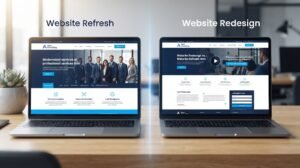
The right option depends on your current website and business goals. A refresh may work when the site performs well but looks dated. A full redesign may make more sense when technical problems, poor navigation, and changing business needs require broader changes. A custom website redesign should address real problems rather than add unnecessary features.
| Area | Website refresh | Full website redesign |
|---|---|---|
| Visual design | Updates selected elements | May rebuild the complete visual system |
| Page structure | Usually stays similar | Can change significantly |
| Functionality | Small improvements | New or rebuilt features may be needed |
| SEO work | Focuses on specific issues | May require a wider technical review |
| Best suited for | Websites that still meet most needs | Websites with deeper design or technical problems |
Good professional website redesign services begin with understanding your business, customers, and current website. The team reviews existing pages, content, performance, and technical issues. It then creates a plan that defines the project scope, required features, design direction, and expected deliverables.
The development stage turns that plan into a working website. Depending on the project, website redesign and development may include responsive layouts, service pages, contact forms, content updates, integrations, and testing. Some businesses need WordPress website redesign services, while others need a different platform or custom code. The right solution depends on your current system and future needs.
The website redesign process should follow clear stages. First, the team reviews your existing website and business goals. Next, it plans the structure and designs page layouts. Developers then build the approved design, test important features, and prepare the website for launch.
Testing matters as much as design and development. The team should check mobile layouts, forms, links, page speed, browser compatibility, and essential SEO settings. A proper launch plan also includes backups and a way to address unexpected problems. This reduces avoidable errors and helps your team manage the change.
Website design includes both appearance and function. The user interface (UI) covers visible elements such as buttons, menus, forms, and page layouts. User experience (UX) covers how easily people can understand the website and complete their tasks. Both areas affect how customers interact with your business online.
A useful website UI UX redesign makes important information easier to find. It improves readability, page flow, and the path from the first visit to the desired action. The design should also consider website accessibility, including readable contrast, clear labels, keyboard access, and meaningful text for images. These improvements help more people use your website.
Your website structure should reflect the way customers search for information. Main service pages need clear names and logical connections. Supporting pages should answer common questions without repeating the same information across the site. This makes the website easier to understand for visitors and search engines.
A content management system (CMS) allows your team to update supported content without changing the code for every edit. During a redesign, check whether your current platform meets your needs. Keep useful content, improve weak pages, and plan any URL changes carefully. Removing valuable pages without a clear reason can damage existing search visibility.
Before launch, the team should test forms, links, menus, mobile layouts, and key integrations. It should also check analytics, indexing settings, redirects, and important page metadata. If your site accepts payments or collects sensitive information, those features need suitable testing and security checks.
After launch, monitor errors and customer activity. Review website performance, form submissions, and important search pages to catch problems early. Ongoing website maintenance and redesign planning helps keep the site updated as your business changes. Ask your provider what support is included and which tasks will require a separate agreement.
A redesign can create a stronger foundation for search engine optimization when it improves page structure, mobile usability, performance, and content quality. Clear headings and useful internal links help visitors explore related topics. However, rankings also depend on competition, relevance, content quality, and other factors outside the design itself.
The project should also support website conversion rate optimization. Clear service descriptions, helpful trust signals, and simple contact forms can make it easier for visitors to take action. Track the results with website analytics before and after launch. Compare meaningful measures, such as qualified inquiries and completed forms, rather than relying only on page views.
Changing URLs without a plan can cause search engines and visitors to encounter missing pages. Before launch, list your current URLs and identify the pages that need to keep their existing addresses. When a URL must change, use suitable 301 redirects to send visitors and search engines to the relevant new page.
A technical SEO website migration should also review internal links, canonical tags, XML sitemaps, indexing settings, and page metadata. Keep useful content wherever possible and test important redirects before launch. After the change, monitor Google Search Console for indexing issues, crawl errors, and unusual changes in search performance.
Each important service page should answer the questions a potential customer is likely to ask. Explain the service, who it helps, what the process involves, and how to make an inquiry. Clear headings and relevant examples help visitors decide whether your business suits their needs.
Landing page optimization can improve the path between interest and action. For example, a page promoting website development may benefit from a clear project inquiry form and a direct explanation of the service. Test changes over time and measure completed inquiries. A redesigned page is not automatically successful just because it looks more modern.
Consider a fictional consulting company with a website that receives visitors but few inquiries. Its service descriptions are vague, the mobile menu is difficult to use, and the contact form asks too many questions. A redesign could simplify the form, improve page headings, and make the next step more obvious.
The company should then compare results with its earlier performance. It could track qualified inquiries, form completion rates, mobile engagement, and organic search traffic. This example shows a possible approach, not a guarantee of results. The actual outcome would depend on the company’s audience, traffic quality, implementation, and offer.
The business website redesign cost depends on the size and condition of your website. A small brochure website usually requires less work than a large corporate site with custom features. Content writing, integrations, design complexity, platform changes, and SEO requirements can also affect the total price.
Ask for a written proposal before choosing a provider. It should explain what the project includes, what it excludes, how revisions work, and whether support is available after launch. Compare website redesign packages by their actual deliverables rather than price alone. A low initial quote may not include important tasks such as content migration, redirects, testing, or ongoing maintenance.
| Cost factor | Why it matters |
|---|---|
| Number of pages | More pages usually require more design, content, and testing work. |
| Custom design | Unique layouts and features need additional planning and development. |
| Content requirements | Writing, editing, and moving content add to the project scope. |
| Integrations | CRM tools, booking systems, payments, and other connections need testing. |
| SEO requirements | Audits, redirects, metadata, and migration planning require specialist work. |
| Maintenance | Updates, backups, monitoring, and support may involve ongoing fees. |
A useful quote explains the full scope of work in clear language. It should identify the pages being redesigned, the features being developed, and the testing included before launch. It should also explain who supplies images and copy, who owns the final website files, and how changes will be handled.
Ask each business website redesign company the same questions so you can compare proposals fairly. Some providers offer fixed-scope packages, while others price projects based on specific requirements. Choose a plan that matches your needs and budget. Do not pay for features your customers will not use.
There is no single schedule that suits every business website. Some websites need frequent content and security updates but only occasional design changes. Others need a redesign sooner because their technology is outdated, their services have changed, or their existing design creates serious usability problems.
Review your website whenever you notice a clear business or technical issue. Use customer feedback, analytics, performance tests, and search data to guide your decision. If the site still meets your needs, smaller improvements may be enough. If several major problems appear together, professional website redesign solutions may offer a more practical long-term approach.
Consider acting sooner when important pages stop working, mobile visitors struggle to use your site, or customers cannot complete key tasks. Security concerns and unsupported software also deserve prompt attention. You should not wait for a scheduled redesign if a serious issue puts your business or users at risk.
Look at the business impact before choosing the scope. If a broken form prevents customers from contacting you, fix it immediately. If the entire website has become difficult to maintain, a broader project may be appropriate. Prioritize the problems that affect customers, operations, and business goals most directly.
Choosing a provider involves more than comparing designs or prices. Look for a team that understands your business goals, explains its process, and can discuss both design and technical needs. A suitable website redesign agency should be able to explain its recommendations in simple terms and connect each major decision to a real requirement.
Review relevant examples, project timelines, communication methods, and post-launch support. Ask how the team handles SEO, redirects, accessibility, performance, and testing. Experienced website redesign experts should be comfortable discussing risks as well as benefits. Check the contract carefully so you understand the deliverables, ownership terms, payment schedule, and responsibilities on both sides.
Look for projects that match your website’s size, industry, or functionality. A provider that has worked on service websites may understand lead-generation needs, while a complex corporate project may require experience with integrations and large page structures. Ask what problems each example solved and how success was measured.
Do not rely on attractive screenshots alone. Review live websites where possible and test them on your phone. Check whether navigation works, pages load properly, and contact options are easy to find. Ask for references or verified case studies if they are available, and confirm that the examples represent the provider’s actual work.
A redesign company should understand how website changes can affect organic search traffic. Ask how it audits existing pages, protects useful URLs, plans redirects, and checks indexing after launch. If your site receives valuable organic traffic, SEO protection should be part of the project from the beginning.
The provider should also explain its approach to mobile layouts, page speed, accessibility, security, and analytics. Avoid promises of guaranteed rankings or a fixed increase in leads. Good providers set realistic goals, measure results, and explain what depends on your content, market, and ongoing work.
Before signing, confirm the project scope, expected timeline, payment terms, revision limits, and launch responsibilities. Ask who owns the website, domain, design files, code, and content after payment. You should also know whether the provider will help if an important feature fails after launch.
Clarify the cost of future updates and support. Some projects include a short period for fixing launch-related defects, while ongoing maintenance may require a separate agreement. Clear terms reduce confusion and help both sides understand what happens after the website goes live.
XpertCode offers web development, UI/UX design, and SEO optimization services for businesses that want a stronger online presence. If your current website no longer meets your needs, the first step is to identify what needs to change. The right plan should reflect your services, audience, and business goals.
Explore XpertCode’s web development services to learn more about its development offering. When considering business website redesign services, discuss your current website, the problems you want to solve, and the features you need. A clear project scope helps you understand the work before making a decision.
Start by identifying the main purpose of your website. You may want more qualified inquiries, clearer service information, better mobile usability, or an easier way to manage content. These goals help determine which changes deserve priority and which features can wait.
A useful redesign plan should also include performance checks, SEO considerations, and post-launch measurement. Ask questions about the proposed approach and make sure the scope matches your needs. The goal is not simply a newer website. It is a website that better supports your business and its customers.
Choosing a redesign can raise questions about timing, cost, search visibility, and the amount of work involved. The answers depend on your current website, business goals, and the scope of the project. These common questions can help you make a more informed decision.
Before you hire a provider, ask for a clear plan that covers design, development, SEO, testing, and maintenance. Compare the proposed work with your actual needs instead of assuming every website requires a complete rebuild. A careful assessment can help you spend your budget where it matters most.
There is no fixed rule for how often a business should redesign its website. Review it regularly and consider a redesign when the design, technology, content, or user experience no longer supports your goals. Security updates and small improvements may be needed much more often than a full redesign.
A redesign can support SEO if it improves content quality, site structure, mobile usability, and technical performance. However, a redesign does not guarantee higher rankings. Poor URL changes or the removal of useful content can harm search visibility, so SEO planning and post-launch monitoring are important.
The timeline depends on the number of pages, design requirements, content needs, and technical complexity. A small website may require much less time than a large corporate site with custom features. Delays can also occur when content, approvals, or required integrations are not ready.
Choose a redesign when your existing platform still meets your needs and its main problems can be fixed. Consider building a new website when the current system cannot support essential features, has serious technical limitations, or costs too much to maintain. A professional audit can help you compare both options.
Review your website analytics, form submissions, phone calls, and qualified inquiries over time. Check whether important pages receive traffic but produce few actions. Also test your forms and contact links yourself. A drop in leads can have several causes, so investigate traffic quality, messaging, usability, and technical errors before deciding on a redesign.
Your website should help people understand your business, trust your services, and take the next step. If it creates confusion, performs poorly, or no longer reflects your company, it may be time to consider an upgrade.
The best business website redesign services start with a clear assessment and a practical plan. Focus on customer needs, useful content, mobile usability, technical quality, and measurable business goals. Choose a provider that explains the work clearly and protects your existing website’s value. A thoughtful redesign can give your business a stronger online foundation, although results will depend on the quality of the work and how well it serves your audience.