Business Website Development Services: What Growing Businesses Need
Your website can do much more than display your business name and contact details. It can explain your services, answer customer questions, build trust, and bring you new enquiries. However, these results require careful planning and the right features. Business website development services help you build a website that supports your business goals. Whether you run a small company, a growing startup, or an established organisation, your website should make it easier for customers to choose you.
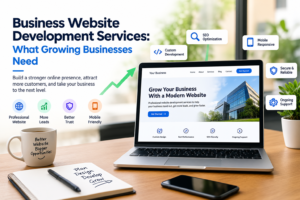
A successful website starts with a clear purpose. It should explain what you offer, who you help, and why customers should trust your business. It should also work well on mobile phones, load quickly, and make important information easy to find. This guide explains the main services, essential features, development process, and costs you should consider. You will also learn how to choose a development partner and avoid common mistakes.
Why Your Business Needs a Professional Website
Your website often gives potential customers their first impression of your company. People may visit it after finding your business on Google, seeing a social media post, or receiving a recommendation. They expect clear information and a simple way to contact you. A confusing or outdated website can create doubts before a conversation even begins. Professional website development helps you present your business clearly and consistently. It gives visitors a central place to explore your services, understand your value, and take the next step.
A website also gives you more control over your online presence. Social media platforms can help you reach people, but your website can organise your services, case studies, and enquiries in one place. It can support your sales team and answer common questions at any time. For example, a plumbing company can explain its services and service areas. A software company can present its solutions, process, and portfolio. These website solutions for growing businesses should match the needs of the audience, rather than follow a design trend without a clear purpose.
How a Business Website Supports Long-Term Growth
A well-planned website can grow with your business. You might start with a few service pages and a contact form. Later, you may add case studies, booking tools, customer portals, or new service categories. This flexibility matters because your business needs can change over time. Website scalability helps you expand the site without rebuilding everything from the beginning. The development team should consider your future plans before choosing the structure, technology, and features.
A website can also help you understand what customers want. Analytics tools can show which pages attract visitors and which actions people take. You may discover that one service page receives many visits but few enquiries. That information can guide improvements to the page content, calls to action, or form. However, tracking data alone will not grow your business. You need to review it, understand customer behaviour, and make changes based on useful evidence.
What Do Business Website Development Services Include?
Business website design and development covers the planning, design, building, testing, and launch of a website. The exact work depends on your goals and budget. A basic project may include page design, content setup, contact forms, and mobile layouts. A larger project may need custom features, payment systems, booking tools, or connections with other business software. A reliable provider should explain what the project includes before work begins. This helps you understand what you are paying for and what your team must provide.
Professional website design services should also consider usability, security, speed, search visibility, and future updates. Design makes the website look clear and consistent. Development makes its features work correctly. Content explains your services in language customers understand. Testing helps identify problems before launch. Ongoing support keeps the website working as your business changes. When comparing website development services for companies, look beyond appearance and ask how each part will support your business goals.
Website Planning, Design, Development, and Launch
Planning gives the project a clear direction. The team identifies your audience, goals, main pages, required features, and available budget. It then creates a structure that helps visitors find information without unnecessary steps. The design stage turns that structure into page layouts and visual styles. During development, the team builds the pages, forms, and other features. Each stage should follow agreed requirements, so the finished website matches the purpose of the project.
Before launch, the team should test the website on different screen sizes and common browsers. Forms must send information to the correct place. Links should work, and important pages should load properly. The team should also check page titles, redirects where needed, analytics, backups, and security settings. A launch is not complete simply because the homepage appears online. A proper business website development process checks whether customers can use the website and whether the business can manage it.
Integrations, Maintenance, and Ongoing Support
Many businesses need their websites to work with other tools. These may include customer relationship management systems, email marketing platforms, booking software, payment services, or inventory tools. The right integration can reduce manual work and help information move between systems. However, every integration adds requirements for testing, security, and future updates. You should identify essential connections early instead of discovering them after the budget has been spent.
After launch, website maintenance and support can include software updates, security checks, backups, error fixes, and content changes. The level of support depends on your platform and business needs. Some companies need occasional updates, while others require regular technical assistance. Ask whether support is included in the initial price or charged separately. A clear agreement should explain response times, covered tasks, backup arrangements, and any extra fees.
Essential Features Every Business Website Should Have
A business website needs more than attractive colours and large images. Its business website features and functionality should help visitors understand your offer and act with confidence. Most businesses need a clear homepage, service or product pages, an about page, and contact information. Depending on your industry, you may also need pricing details, case studies, testimonials, or booking options. Every page should have a purpose. Remove features that distract visitors without helping them make a decision.
The website should also include clear calls to action, readable text, working forms, and useful navigation. Website navigation helps people move between pages without getting lost. A visitor should not have to search through several menus to find your services or contact details. Good user experience (UX) design reduces unnecessary effort and makes important tasks easier. These details can improve how people interact with your business, although results will also depend on your offer, traffic quality, pricing, and customer demand.
Must-Have Pages for a Professional Business Website
Your homepage should explain what your business does and whom it serves. It should guide visitors towards your main services or products. Individual service pages should describe the problem you solve, your approach, and the next step. An about page can explain your experience, values, and team. A contact page should provide clear ways to reach you. Together, these pages create a useful foundation for a professional online presence for businesses.
Other pages should reflect your actual needs. A business selling online may need product categories, product details, delivery information, returns policies, and checkout pages. A consulting company may benefit from case studies and detailed service pages. A company serving other businesses may need industry-specific pages and information about its process. Avoid adding pages simply to make the website look larger. Each page should answer a customer question or support a clear business goal.
Security, Accessibility, and Performance Essentials
Website security protects your website, its information, and the people who use it. Basic measures include HTTPS, secure account access, updated software, reliable backups, and suitable protection against common attacks. Access should be limited to people who need it. Websites that collect personal or payment information may need additional safeguards. The exact requirements depend on the features, data, and laws relevant to your business. Security should be considered during development, not added as an afterthought.
Website performance optimization helps pages load and respond efficiently. Large images, unnecessary scripts, and poorly configured hosting can slow a website down. Testing tools can identify issues that need attention. Google’s Core Web Vitals guidance explains how to measure loading, interactivity, and visual stability. Website accessibility matters too. Clear contrast, keyboard support, meaningful labels, and useful image descriptions can make a site easier for more people to use. The W3C accessibility resources provide practical guidance for improving accessibility.
Custom Business Websites vs. Website Templates: Which Is Better?
A template gives you a ready-made design that you can adapt to your brand. It may suit a new business with a limited budget and simple needs. Templates can reduce design time and provide a useful starting point. However, the available layouts and features may not fit every business. You may need extra plugins or changes to make the site work as intended. Affordable business website development should consider the total cost of setup, customisation, maintenance, and future changes rather than the initial price alone.
Custom website development gives you more control over the design, structure, and functionality. It can be useful when your business needs a unique customer journey or specialised tools. However, custom work may require more time, money, and technical support. It is not automatically better for every business. The right option depends on your requirements, resources, and growth plans. A good development partner should explain the trade-offs and recommend an approach that fits the project.
When a Website Template Makes Sense
A template can be a practical choice when you need a small website with standard features. For example, a local consultant may only need a homepage, service details, an about page, and a contact form. A suitable template can provide these elements without the cost of building every component from scratch. This can help a new business establish a useful online presence while keeping the initial project manageable.
Before choosing a template, check its mobile layout, update history, support options, and compatibility with essential tools. Make sure you can change the colours, fonts, images, and page content to match your brand. Avoid installing too many plugins to overcome template limitations. Extra tools can increase complexity and create more work later. If the template cannot support important business requirements, compare the cost of adapting it with the cost of a more suitable solution.
When Custom Business Website Development Is Worth Considering
Custom work may be worthwhile when your business needs features that standard templates cannot support well. These may include advanced booking flows, customer dashboards, special pricing rules, or connections with internal systems. It can also help when your brand needs a distinctive design that supports a specific customer journey. In these cases, custom business website design should solve a real business problem rather than focus only on visual uniqueness.
You should still define the scope carefully. Custom features need design, development, testing, documentation, and ongoing maintenance. Ask the developer to explain how each feature will work and what it will cost to maintain. Start with the functions that matter most to customers and staff. You can add less important features later. This approach helps control costs and reduces the risk of paying for complex tools that few people use.
Mobile-Friendly Website Development for Modern Customers
People may visit your website from phones, tablets, laptops, or desktop computers. The experience should remain clear across these devices. Responsive web development allows the layout to adapt to different screen sizes. Text should remain readable, buttons should be easy to tap, and images should fit the available space. A mobile-friendly website should not force users to zoom in or scroll sideways to read basic information. Mobile usability is part of the core website experience, not an optional extra.
Responsive website design for businesses should also consider how people use their devices. Phone visitors may want to call, request a quote, find an address, or book a service quickly. Important actions should be easy to reach. Large menus, intrusive pop-ups, and long forms can make these tasks frustrating. Google also recommends mobile-friendly websites and uses the mobile version of a site for indexing. You can read its mobile-first indexing guidance for further details.
Responsive Design and Mobile User Experience
A responsive layout adjusts content to the available screen rather than simply shrinking the desktop page. Navigation may change into a compact menu, columns may stack vertically, and images may resize. These changes should preserve the most important information. Designers should also consider touch targets, font sizes, form fields, and the spacing between interactive elements. Testing on real devices can reveal issues that are difficult to notice on a large monitor.
Mobile testing should cover the full customer journey. Open the website on a phone and try to find a service, read its details, and submit an enquiry. Check whether the form is easy to complete and whether confirmation messages appear correctly. Test phone numbers and email links as well. A design may look attractive in a screenshot but still be difficult to use. The goal is to make common tasks simple and reliable.
How SEO-Friendly Website Development Helps Customers Find Your Business
A website needs clear content and a structure that helps both visitors and search engines understand each page. Search engine optimization (SEO) includes technical and content-related work that can improve a site’s ability to appear for relevant searches. This may involve descriptive page titles, useful headings, crawlable links, clean URLs, and an organised site structure. SEO-friendly website design services should support these basics while keeping the experience natural for visitors. Good technical setup does not guarantee rankings, but poor setup can create avoidable problems.
Your pages should match what potential customers actually want to know. A company offering web development, for example, may need separate pages for its main services. Each page should explain one clear offer instead of repeating the same general text. Content should answer practical questions and provide useful details. Google’s SEO Starter Guide explains how clear, helpful content and understandable site structures support search visibility. Avoid filling pages with repeated keywords. Write for people first, then review the SEO elements.
Technical SEO Essentials During Website Development
Technical SEO starts with a website that search engines can access and understand. Important pages should be reachable through normal links. Page titles and descriptions should describe the content accurately. Images should have suitable file sizes and meaningful alternative text when needed. The site should use HTTPS and handle redirects carefully when URLs change. XML sitemaps and canonical tags may also be useful, depending on the website structure. These elements should be checked before launch and reviewed when major changes occur.
Performance is another part of the technical picture. Slow pages can frustrate users, especially when they are comparing several providers. Developers can optimise images, reduce unnecessary scripts, and improve caching where appropriate. They should also test the site after adding third-party tools because these can affect speed and interaction. Monitor real performance after launch instead of relying only on a single test. Search visibility also depends on competition, relevance, content quality, and many other factors beyond development.
Building Service Pages Around Customer Search Intent
A service page should answer the questions a potential customer has before contacting you. Explain what the service includes, who it suits, how the process works, and what the customer should do next. Include useful examples where possible. A business website developer should also organise the page with clear headings and relevant internal links. This makes the content easier to scan and helps visitors explore related information.
Do not create many nearly identical pages just to target small keyword variations. Each page should offer a clear reason to exist. For example, a company may create separate pages for website design and e-commerce development because the services solve different problems. The pages should have distinct information and calls to action. Use customer questions, sales conversations, and search data to identify meaningful topics. This creates a more useful site than publishing multiple pages with only minor wording changes.
Website Features That Turn Visitors Into Leads and Enquiries
A lead generation website helps visitors take a meaningful action. That action might be requesting a quote, booking a consultation, calling the business, or submitting a project brief. The page should explain the offer before asking for personal information. A clear headline, useful service details, relevant proof, and a visible call to action can make the next step easier. Website design that generates leads focuses on customer needs rather than adding buttons everywhere. The aim is to remove confusion and help suitable visitors move forward.
Conversion rate optimization means improving the share of visitors who complete a desired action. Start by checking whether the offer is clear and whether the form asks for too much information. A long form may discourage some visitors, while a very short form may not collect enough detail to qualify an enquiry. The right balance depends on your sales process. Test changes over time and review lead quality, not just the number of submissions. More enquiries are useful only when they have a reasonable chance of becoming customers.
Contact Forms, Calls to Action, and Trust Signals
A good contact form asks for the information needed to respond. For a basic enquiry, a name, email address, and message may be enough. A quote request might also need a service type, budget range, or project timeline. Explain what happens after submission. Make sure the form works on mobile devices and provides a clear confirmation. Avoid requesting sensitive information unless it is necessary and handled appropriately.
Trust signals can help visitors assess your business. These may include real testimonials, relevant case studies, professional credentials, clear contact details, and transparent service information. Use only claims you can support. Do not publish invented reviews or exaggerated results. A potential customer should be able to understand who you are and what you can deliver. For service businesses, showing the process and setting realistic expectations can build confidence more effectively than vague promises.
Measuring Website Leads and Conversion Performance
Set a clear goal before measuring website performance. You might track quote requests, consultation bookings, phone calls, or completed purchases. Analytics can show where visitors come from and which pages they use before taking action. If many visitors leave a service page without contacting you, review the page’s clarity, relevance, and next step. If a form receives visits but few submissions, test its length and usability.
Measurement should continue after launch. Record a baseline, make one meaningful change at a time, and review the results over a reasonable period. Small samples can produce misleading conclusions, so avoid treating every short-term change as proof. Track the quality of enquiries alongside conversion rates. A page that generates fewer but better-qualified leads may be more valuable than one that attracts many unsuitable requests.
Our Business Website Development Process: From Planning to Launch
A clear website development process helps keep a project organised. It begins with a discussion about your business, audience, services, and goals. The team then documents the website project requirements, including the pages, features, integrations, content, and technical needs. These requirements help define the project scope and reduce misunderstandings. Before development begins, both sides should agree on the expected deliverables, timeline, responsibilities, and payment terms.
The next stages usually include planning the site structure, designing the pages, building the features, and testing the results. You should have opportunities to review important milestones and provide feedback. After launch, the team can monitor errors and help resolve issues covered by the agreement. A structured process does not remove every challenge, but it gives everyone a shared plan. It also makes it easier to identify changes that may affect cost or delivery time.
Discovery, Planning, and Website Design
During discovery, the team learns about your business and the people you want to reach. It should ask what customers need, what makes your service different, and what actions the website should encourage. The team can then prepare a sitemap, page list, and feature requirements. This is the time to discuss branding, existing content, competitors, integrations, and any technical limitations that could affect the project.
Design turns the plan into a visual experience. The team may prepare wireframes before creating polished page layouts. Wireframes help everyone review the content order and page structure before detailed styling begins. The design should reflect your brand while keeping information easy to read. Review the mobile layout as well as the desktop version. Agreeing on the design before development reduces the chance of expensive changes later.
Development, Testing, and Website Launch
During development, the team builds the agreed pages and functions. This may include content management tools, forms, search features, or third-party integrations. The team should keep the website organised and test components as they are added. You may need to provide approved text, images, account access, or business details. Delays can occur when important content or decisions arrive late, so responsibilities should be clear from the start.
Testing should cover links, forms, mobile layouts, speed, security settings, and key user journeys. The team should check that important pages are accessible and that tracking tools work as intended. Before launch, confirm the domain, hosting, backups, and update process. After launch, review the live site rather than assuming it works exactly like the development version. Keep a record of any remaining issues and agree on how they will be resolved.
How to Choose the Right Business Website Development Company
Choosing a business website development company requires more than comparing prices. Look for relevant experience, clear communication, and a process that fits your needs. Review live websites the team has built and test them yourself. Check whether the examples have useful content, working forms, mobile layouts, and clear navigation. Ask what each project involved and which parts the provider handled. A strong portfolio is useful, but the provider should also explain how it will approach your specific goals.
When considering a website design and development agency, ask for a written proposal. It should explain the scope, deliverables, timeline, price, revision process, ownership, and ongoing support. Confirm who will control your domain, hosting, website files, and important accounts. Ask whether the quoted price includes content entry, premium tools, security work, and post-launch fixes. A low initial quote may not cover everything you need. The right partner should be transparent about limitations, additional costs, and what success can realistically mean for your business.
Questions to Ask Before Hiring a Website Developer
Ask how the developer will learn about your audience and business goals. Find out who will write the content, prepare the design, build the website, and test it. Ask how revisions work and how changes to the original scope are priced. You should also understand how the website will be maintained after launch. These questions reveal whether the provider has a clear process or expects you to solve important details yourself.
Ask about ownership and access before signing an agreement. You should know who owns the finished work and how you can access the domain, hosting, content, and website files. If the site uses paid themes or plugins, ask who pays for renewals. If you later change providers, understand how the transfer will work. Clear answers protect your business and make future decisions easier.
How to Compare Website Development Proposals
Compare proposals by scope rather than price alone. One provider may include design, content setup, testing, and training. Another may charge extra for each of these tasks. Check whether the proposals cover the same number of pages, integrations, revisions, and support services. Ask for a breakdown when an item is unclear. This helps you compare the actual value and avoid unexpected expenses.
Also consider how well each proposal matches your business priorities. A small service company may not need a complex custom platform. A larger organisation may need advanced integrations, access controls, or more detailed testing. The proposal should explain why its recommended solution fits your requirements. Be cautious of guaranteed search rankings or promises of instant leads. A website can support marketing, but business results depend on many factors outside the developer’s control.
Common Business Website Mistakes That Can Cost You Customers
One common mistake is building a website around what the business wants to say instead of what customers need to know. Visitors should quickly understand the service, the value it offers, and how to take the next step. Another mistake is using vague headlines that could describe almost any company. Clear language makes your offer easier to understand. Strong images can help, but they should support the message rather than push important information out of view.
Other problems include slow pages, broken forms, outdated details, weak mobile layouts, and missing calls to action. Some websites also hide contact information or make visitors complete long forms before asking a simple question. These issues can create unnecessary friction. Review your site from the customer’s perspective. Try common tasks on a phone and desktop computer. Ask someone unfamiliar with the business to find a service and submit an enquiry. Their experience may reveal problems you have stopped noticing.
Warning Signs Your Website Is Losing Potential Customers
A drop in enquiries can have several causes. Your website may attract visitors who are not a good match, or your service pages may fail to explain the offer. A form could be broken, the phone number might be outdated, or the page may load poorly on mobile devices. Do not assume that every decline is a design problem. Check analytics, form delivery, traffic sources, and any recent technical changes before deciding what to fix.
Watch for repeated customer questions that your website could answer. If visitors often ask about pricing, service areas, delivery, or project timelines, consider adding clear information to the relevant page. Also review whether your calls to action match customer readiness. Someone researching a complex service may want a consultation rather than an immediate purchase. Small improvements based on real customer behaviour can make the website more useful without requiring a complete rebuild.
When Should You Upgrade or Redesign Your Business Website?
A website may need improvement when it no longer reflects your services, brand, or customer needs. It may also become difficult to update, work poorly on phones, or lack features your team now requires. In some cases, a few focused changes can solve the problem. You may need clearer service pages, better navigation, improved speed, or a simpler enquiry form. Website redesign services are worth considering when the current structure or visual design prevents these improvements from working well.
A complete redesign is not always necessary. Start by identifying the problems and deciding which ones affect customers most. Review website performance, enquiry data, customer feedback, and technical limitations. If the current platform is stable and flexible, targeted improvements may be enough. If the site is difficult to maintain or cannot support essential features, rebuilding may be more practical. The decision should come from evidence and business requirements, not simply from a desire for a newer look.
Website Redesign vs. Website Improvement
Website improvement focuses on specific issues while keeping most of the existing structure. Examples include rewriting a service page, improving mobile layouts, compressing images, or making the contact form easier to use. This approach can work well when the site already has a sound foundation. It may also help you test changes before investing in a larger project. However, improvements have limits when the underlying technology or structure is no longer suitable.
A redesign changes a larger part of the website’s structure, appearance, or functionality. It may be needed when your business has changed significantly or the current site cannot support new requirements. Before replacing the site, identify valuable pages and existing search traffic. Plan URL changes and redirects carefully to avoid unnecessary disruption. Keep useful content where appropriate, and test the new site before launch. The goal is to solve real problems while protecting what already works.
Frequently Asked Questions About Business Website Development
What are business website development services?
Business website development services cover the work needed to plan, design, build, test, and launch a website for a company. Depending on the project, they may also include content setup, mobile layouts, custom features, search engine optimisation, security, hosting guidance, and ongoing support. The exact scope varies by provider. Before starting, ask for a written list of deliverables so you know what is included and what may cost extra.
How long does it take to develop a business website?
The timeline depends on the website’s size, features, content, and approval process. A small website with standard pages may take a few weeks, while a larger project with custom functionality can take several months. Delays may occur when content, feedback, or required access is missing. Ask the developer for a project schedule with clear milestones. Treat any timeline as an estimate until the scope and responsibilities are agreed.
What should a professional business website include?
A professional website usually needs a clear homepage, relevant service or product pages, an about page, and contact details. It should also offer mobile-friendly layouts, useful navigation, working forms, suitable security, and clear calls to action. Depending on the business, case studies, testimonials, booking tools, or pricing information may also help. The right features depend on your audience and goals, so avoid paying for tools that do not serve a clear purpose.
Can a business website help generate more leads?
Yes, a well-planned website can support lead generation by explaining your services and making contact easy. Clear service pages, relevant calls to action, trust signals, and simple enquiry forms can help suitable visitors take the next step. However, a website does not guarantee leads or sales. Results also depend on traffic quality, competition, pricing, reputation, and the value of your offer. Track enquiries and improve the site based on real performance data.
How do I get started with a business website development project?
Start by defining your business goals and the customers you want to reach. List the main services, pages, features, and integrations you need. Set a realistic budget and identify the content or materials you can provide. Then compare providers by their experience, process, proposal, and support options. You can contact XpertCode to discuss your website goals and determine what type of solution may suit your business.
Choose a Website That Supports Your Next Stage of Growth
Your website should help customers understand your business and make informed decisions. It should be clear, useful, secure, and easy to use across devices. The right solution may be a simple template, a tailored service website, or a more complex custom platform. The best choice depends on your requirements, budget, and future plans. Focus on the features that solve real problems instead of paying for unnecessary complexity.
Before you begin, write down your goals and compare them with the features you actually need. Review the provider’s process, confirm ownership, and understand the ongoing costs. Plan for updates and improvements after launch. If you are ready to build or improve your business website, visit XpertCode to explore its services and discuss your project requirements. A clear plan is the first step towards a website that supports your business over time.